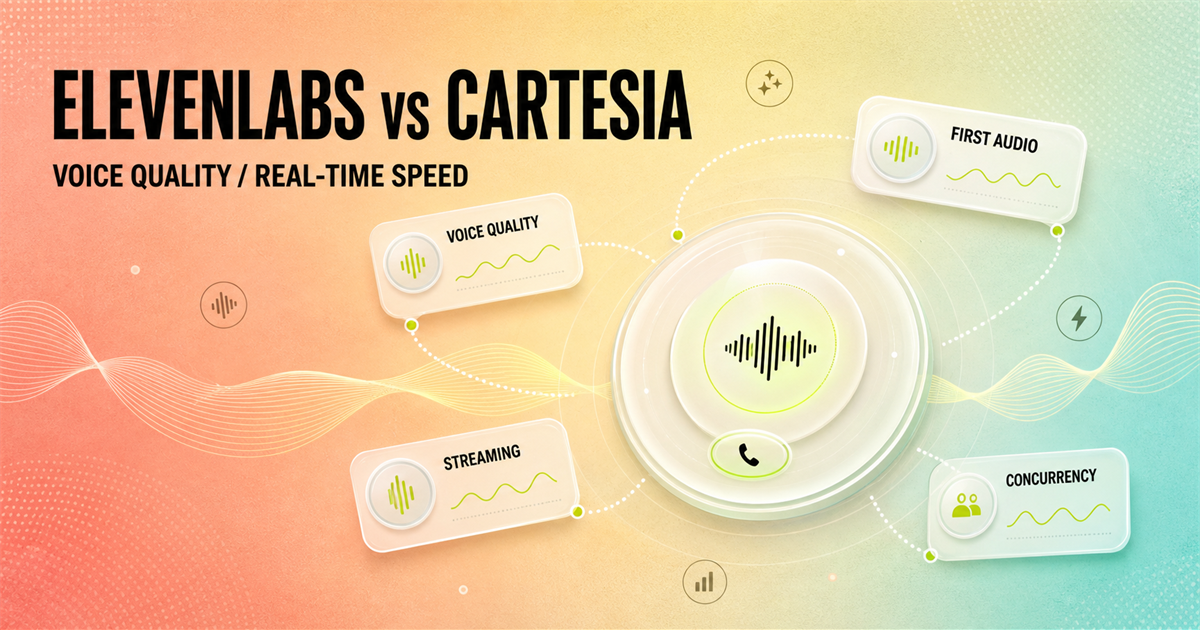
ElevenLabs vs Cartesia is a contest between two definitions of a good AI voice. ElevenLabs gives creators and product teams a wide voice library, expressive models, cloning, and strong performance direction. Cartesia treats speech as live infrastructure. Sonic 3.5 is built to start talking quickly, accept streamed text, handle interruptions, and keep several conversations moving at once.
That distinction matters more than the prettiest ten-second demo. An audiobook listener will forgive a short wait for a convincing performance. A caller who hears dead air after asking about an order assumes the agent froze.
My buying rule is simple: choose ElevenLabs when the voice carries the experience. Put Cartesia first when conversational speed is the experience.
The products solve different voice problems
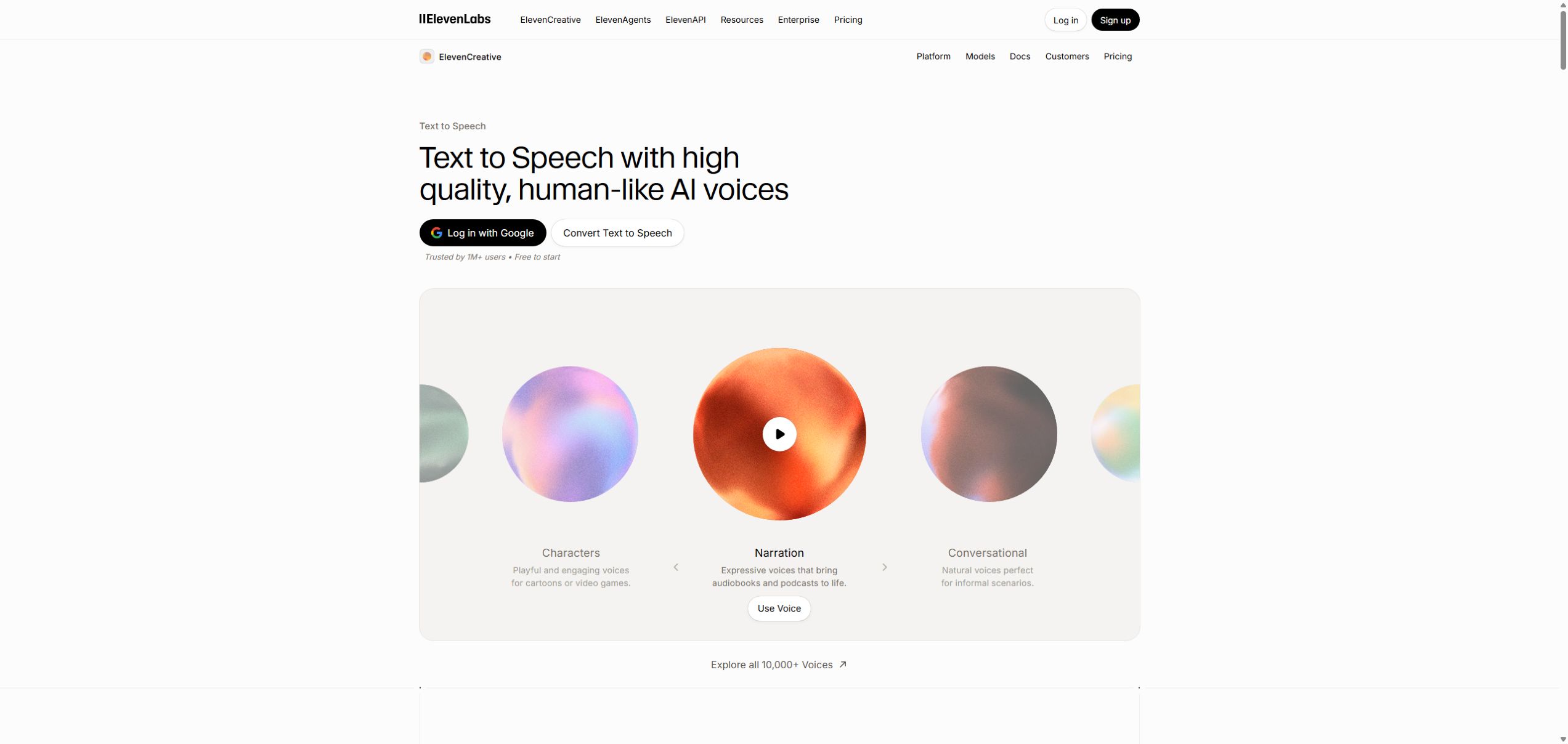
ElevenLabs covers a broad audio stack. Eleven v3 targets expressive speech and dialogue in more than 70 languages. The public voice library contains more than 10,000 voices, and Voice Design plus cloning give you plenty of room to establish a specific sound. ElevenLabs also offers agents, dubbing, speech to text, sound effects, and APIs around that voice layer.
Cartesia is narrower in the way a good specialist is narrow. Its current Sonic page describes Sonic 3.5 as a real-time TTS model with sub-90ms latency and support for more than 40 languages. Those are Cartesia’s published figures, not an independent end-to-end benchmark. The important part is the product shape: WebSockets, contexts, streamed inputs, concurrent generations, and explicit handling for interrupted turns.
Both can power a voice agent. ElevenLabs asks you to choose where you sit between expressive quality and speed. Cartesia starts from the live conversation and works outward.
ElevenLabs gives you the higher creative ceiling
For narration, character work, branded voices, and dialogue that needs to sound performed rather than merely spoken, ElevenLabs remains the easier starting point. Eleven v3 supports emotional direction, audio tags, multi-speaker dialogue, and broad language coverage. Multilingual v2 trades some range for steadier long-form output.
The model choice is part of the work. Eleven v3 is the expressive option, but it is not the low-latency option. ElevenLabs’ model documentation positions Flash v2.5 for real-time use at about 75ms of model inference, across 32 languages. That number excludes the network, application pipeline, queue, and player buffer. ElevenLabs says so plainly, which is useful because many comparisons do not.
The catch appears during revision. A line can gain the right emotion and lose the pronunciation you approved five minutes ago. Long scripts invite retakes, and retakes spend credits. I would divide important narration into approved sections, settle names early, and budget for discarded audio instead of pretending the first generation will ship.
ElevenLabs also makes sense when one team needs several audio jobs. A developer can use Flash for an agent while a creative team uses v3 for campaign narration. Cartesia has expanded beyond one endpoint, but ElevenLabs still offers the broader creative environment.
Cartesia is built around the first moment of speech
Cartesia’s strongest argument is its API design for live speech, with speed as one part of it.
A WebSocket can carry multiple contexts. Each conversational turn gets its own context, and a new context can begin when the user interrupts. Cartesia’s continuation system accepts partial text from an LLM while preserving the speech context between chunks. The official docs also show concurrent contexts on one connection and playback that begins as audio chunks arrive.
Those details remove plumbing that agent teams otherwise build themselves. Sending tiny token fragments can create choppy prosody, while waiting for a complete answer adds silence. Cartesia lets developers control buffering, but the developer still has to decide when responsiveness starts damaging delivery.
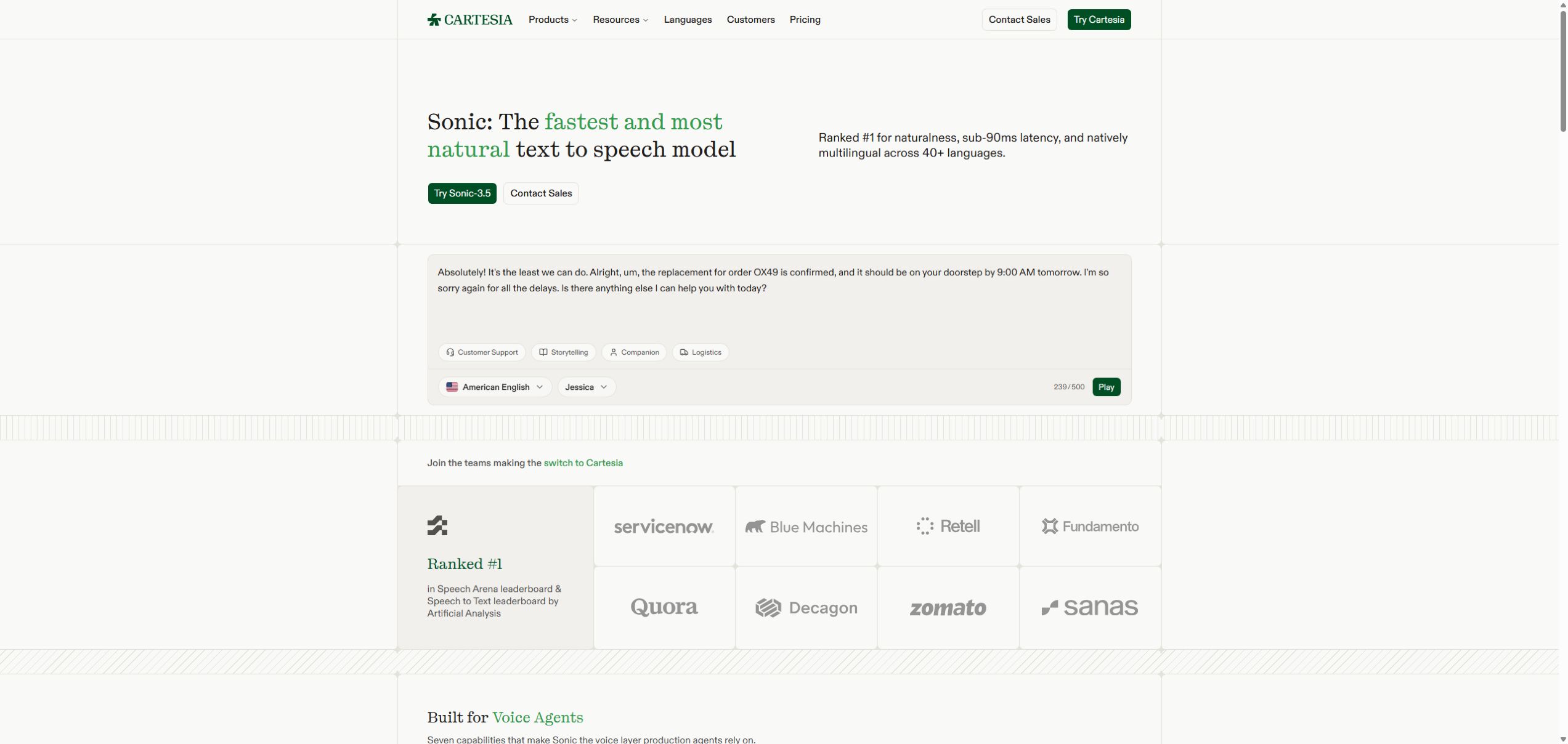
Sonic 3.5 also includes more creative control than the developer-first pitch suggests. Cartesia lists automatic emotional interpretation, nonverbal expressions, instant cloning from ten seconds of audio, localization into 42 languages, and custom pronunciation dictionaries. ElevenLabs still has the deeper creative identity, but Cartesia is no longer a bare speed engine with one polite robot voice.
Voice quality versus conversational consistency
ElevenLabs has more headroom when a single line needs personality. I would reach for it first for an audiobook chapter, a game character, a documentary opener, or a brand voice that has to remain recognizable outside one support call.
Cartesia is easier to justify when every line belongs to a turn. A support agent must begin promptly, pronounce account details clearly, stop when the caller interrupts, and sound stable across hundreds of short responses. Slightly less dramatic speech can feel more human if the timing is right.
Do not compare the tools with one paragraph. Use two test sets. The first should contain narration with an emotional turn, a difficult proper noun, and a sentence long enough to expose pacing. The second should contain short agent replies, an interrupted answer, numbers, an email address, and a sentence that switches language halfway through.
The two tests may produce different winners, which is useful when the finished jobs are also different.
Latency claims need an end-to-end test
Cartesia publishes sub-90ms latency for Sonic 3.5. ElevenLabs publishes about 75ms inference for Flash v2.5. Those figures are not a clean race because model latency and time to first audible sound are different measurements.
The caller experiences the whole chain: end-of-turn detection, transcription, the LLM’s first useful phrase, TTS scheduling, network travel, audio buffering, and playback. A fast TTS model cannot rescue a slow silence detector. A badly chosen text chunk can also make a fast WebSocket wait.
For each provider, record at least 50 turns and inspect median, p95, and the slowest result. Run the test in the region where users actually call. Add concurrent requests until you reach the traffic you expect, then try interruptions and code-mixed speech. The smooth demo run is the least interesting row in the spreadsheet.
ElevenLabs documents separate concurrency limits for Flash models, starting at four on Free and six on Starter. Cartesia currently lists two concurrent TTS requests on Free, three on Pro, five on Startup, and 15 on Scale. Neither entry plan represents a busy call center.
ElevenLabs vs Cartesia pricing in 2026
I checked the public pricing pages on July 23, 2026. The units differ, so a subscription headline alone is misleading.
ElevenLabs lists Free at $0 with 10,000 monthly credits and Starter at $6 with 30,000 credits plus commercial rights. Its API page starts Flash and Turbo text to speech at $0.05 per 1,000 characters and supports pay-as-you-go billing. Character pricing is convenient for an API budget but does not tell you how many retakes a creative project will need.
Cartesia lists:
- Free at $0 with 20,000 monthly credits, about 27 TTS minutes, and two concurrent requests.
- Pro at $5 with 100,000 credits, about 133 minutes, three concurrent requests, commercial rights, and instant voice cloning.
- Startup at $49 with 1.25 million credits, about 1,667 minutes, five concurrent requests, and professional cloning.
- Scale at $299 with 8 million credits, about 10,667 minutes, 15 concurrent requests, and priority support.
Cartesia also prices Line voice-agent calls at $0.06 per minute on the self-serve plans. Telephony through a Cartesia number adds $0.014 per minute, while LLM usage and evaluations currently carry limited-time terms. Model credits, agent minutes, telephony, and an outside LLM can become separate budget lines.
Cartesia offers the cheaper paid entry point and a clear minutes estimate. ElevenLabs gives a broader creative product and a separate character-based API rate. Price the complete call or finished asset instead of comparing only the TTS line.
What people complain about on Reddit
Reddit is good at finding ugly test cases. It is bad at telling us how often they happen. The posts below are recent anecdotes from technical users, not a representative customer survey.
In a recent r/TextToSpeech comparison, the author preferred ElevenLabs for voice quality and Cartesia for pure real-time speed. Their larger warning was that provider rankings changed once they measured streaming, repeated runs, concurrent traffic, and actual call volume. Commenters agreed that one latency spike can matter more than an attractive average.
An r/AI_Agents discussion kept returning to the same complaints: dead air before speech, services marketed as streaming that behave like chunked batch jobs, cost at production volume, accent drift during code-mixing, and benchmarks that ignore p95 or p99 latency. Several users recommended Cartesia for streaming-first work. Others noted that ElevenLabs Flash can be competitive when the text chunking and the rest of the pipeline are tuned carefully.
The common ElevenLabs worry is cost plus latency variance under real traffic. The common Cartesia worry is fit: it expects developers to build the surrounding product, and the low self-serve concurrency limits can force an earlier upgrade. Reddit does not provide enough evidence for a broad claim that either platform is unreliable.
Who should choose ElevenLabs
Choose ElevenLabs if:
- You produce audiobooks, games, documentaries, creator narration, or distinctive brand voices.
- Emotional range and a large voice library matter more than the lowest possible first-audio time.
- One account needs creative generation, cloning, dubbing, and agent APIs.
- Your team already has an editing workflow around the generated audio.
- You want to choose between expressive and low-latency models inside one platform.
Skip it if the project is a latency-sensitive agent and you do not have time to tune model selection, voice type, chunking, geography, and concurrency. Flash is fast, but buying the famous voice demo does not configure the live pipeline for you.
Who should choose Cartesia
Choose Cartesia if:
- You are building support, sales, scheduling, or companion agents with short conversational turns.
- WebSocket input streaming and interruption handling are central requirements.
- You want explicit TTS minutes and concurrency limits on the pricing page.
- Code-mixed or multilingual calls are part of the workload.
- Your developers prefer a focused voice layer over a large creator suite.
Skip it if you need a friendly long-form production desk, detailed timeline editing, or the largest ready-made voice marketplace. Cartesia gives you sharp infrastructure. It does not finish the podcast episode for you.
Who should avoid both
Neither service is the obvious choice when text cannot leave your infrastructure, offline use is mandatory, or open weights are a procurement requirement. A local model may fit better, but your team then owns deployment, monitoring, pronunciation work, and scaling.
Both can also be excessive for occasional narration. If you create one short voiceover every few months, test the free plans and pay only when commercial rights or export volume justify another subscription.
My verdict
My verdict splits by workload. I would begin an audiobook, character, or branded narration project in ElevenLabs. For a latency-sensitive support or sales agent, Cartesia would be my first evaluation.
Before committing, run the same 50-turn harness against ElevenLabs Flash and Cartesia Sonic 3.5. Measure first audible sound, p95 latency, interruption recovery, pronunciation, code-mixing, and the bill at expected concurrency. Spend more time with the failures than the best clip.
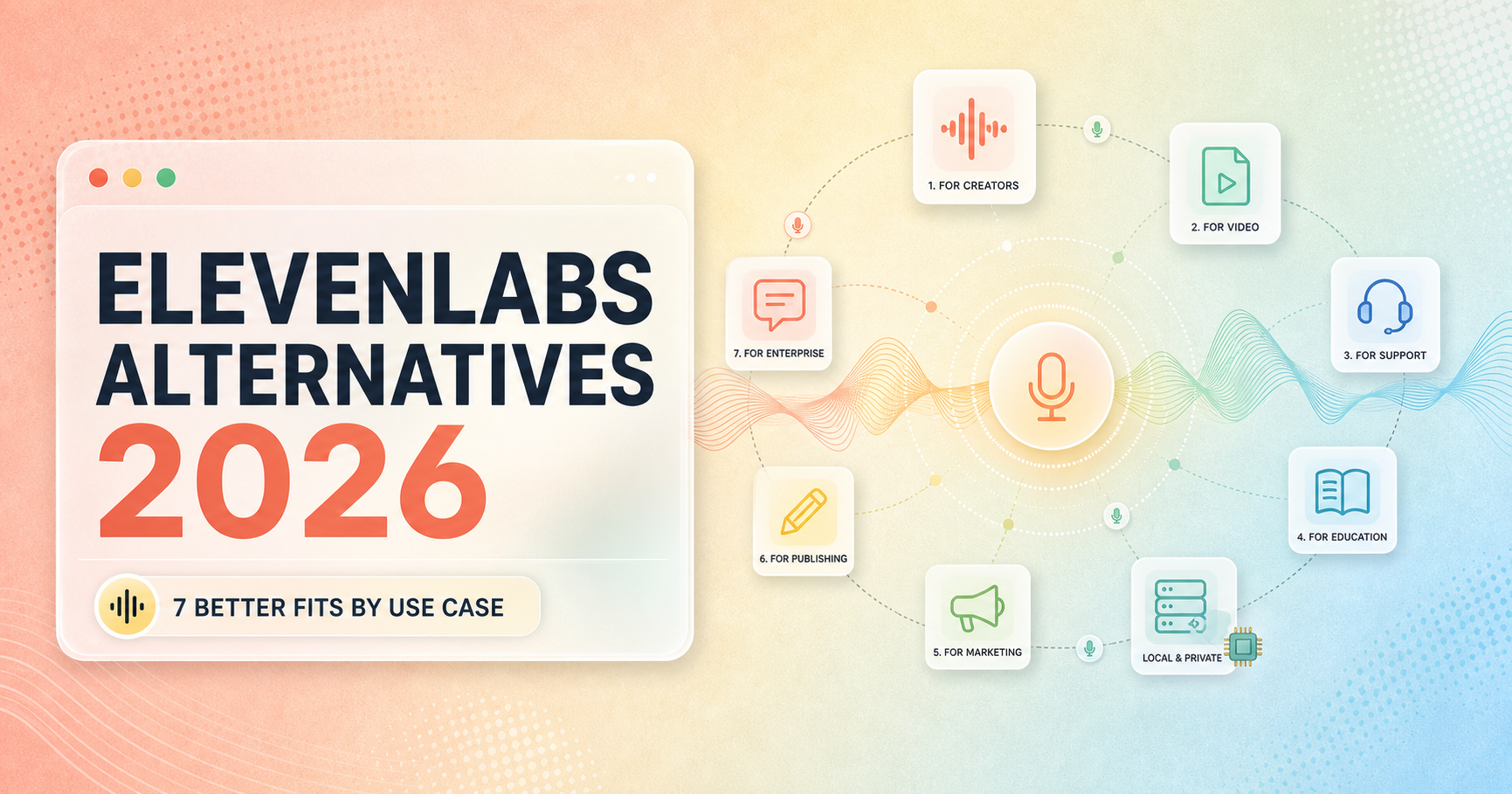
If neither one matches the job, continue with my ElevenLabs alternatives 2026 guide. It compares creator studios, cloud APIs, and a local model without pretending they solve the same problem.