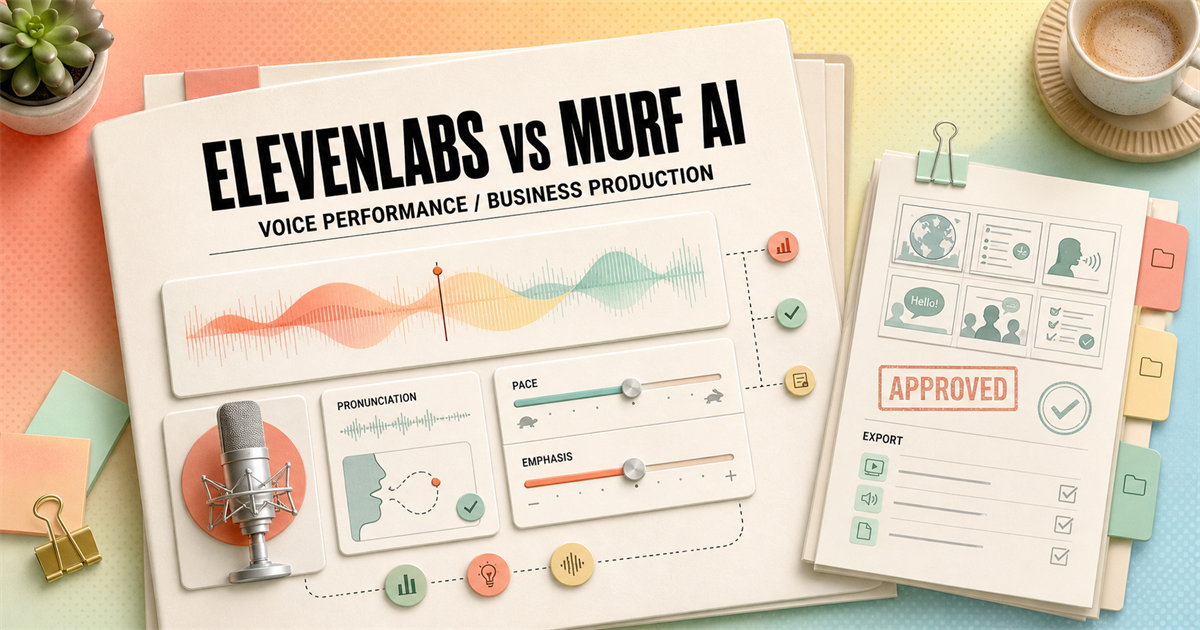
ElevenLabs vs Murf AI is a more useful comparison when you stop asking which demo sounds most human. ElevenLabs is built for expressive speech, character work, cloning, and products that need a serious voice API. Murf AI is built around repeatable business production, with projects, pronunciation tools, presentation integrations, and a studio that a training team can understand without reading API documentation over lunch.
Pick ElevenLabs when the performance is the product. Pick Murf when the voice must move through a business workflow and survive revisions, approvals, and Friday afternoon export requests.
The first clean take hides the difference. A ten-second sample can make either tool look magical. A 40-slide compliance course with acronyms, late script changes, and three reviewers is less romantic. It is also where the better purchase becomes obvious.
The decision starts with what you deliver
ElevenLabs puts the voice at the center. Its current text-to-speech product offers more than 10,000 voices, speech in over 70 languages, dialogue support, voice design, cloning, and controls for emotion, delivery, pacing, and style. The API is a first-class product, not a side door for technical customers.
Murf splits the job differently. Its public editor offers more than 200 voices, 35 languages, voice styles, speed control, and no-sign-up testing. The paid Studio plans add projects, downloads, commercial rights, pronunciation changes, and business-oriented controls. Murf also sells Falcon for low-latency voice agents, so the company now covers both prepared content and live speech.
Both products generate convincing speech, but they are optimized for different people. ElevenLabs suits the person directing a performance. Murf suits the person responsible for getting approved audio into training, presentations, product demos, and internal communications.
ElevenLabs gives you more room to direct a performance
ElevenLabs is the stronger choice for audiobooks, character dialogue, documentary narration, branded voices, and applications where vocal identity carries the experience. Eleven v3 supports expressive delivery and audio tags. Voice Design and cloning give you more ways to establish a distinct sound before you begin polishing individual lines.
When a generation misses, ElevenLabs gives you more ways to chase a specific result. You can work on the pause before a reveal, soften one sentence, or push a character further without changing the entire production setup.
That freedom also creates the main cost trap. Fine control invites retakes. One version fixes the product name and loses the mood. Another nails the mood and rushes the final clause. I approve short sections, lock pronunciations early, and keep a separate allowance for rejected audio. Billing only for the minutes that reach the audience is optimistic accounting.
ElevenLabs also makes more sense when speech must live inside another product. Its APIs cover text to speech, agents, dubbing, speech to text, sound effects, and more. If your actual deliverable is an app, game, support agent, or automated publishing pipeline, a creator studio is useful only if it does not get in the way.
Murf AI is calmer when the job looks like office work
Murf is at its best with training modules, presentations, product explainers, sales enablement, and repeatable corporate narration. The Studio pricing page organizes work around projects and yearly voice-generation hours. Creator includes 100 projects, one editor, commercial rights, Canva integration, and unlimited downloads. Business raises the allowance and adds tools such as emphasis, variability, Say It My Way, PowerPoint integration, audio to text, and a business license.
That list tells you who Murf expects to use the product. A learning designer can correct a term once, keep projects organized, and update a changed paragraph without sending the script back to a recording booth. The result may not need cinematic grief. It needs the policy number pronounced correctly on slide 37.
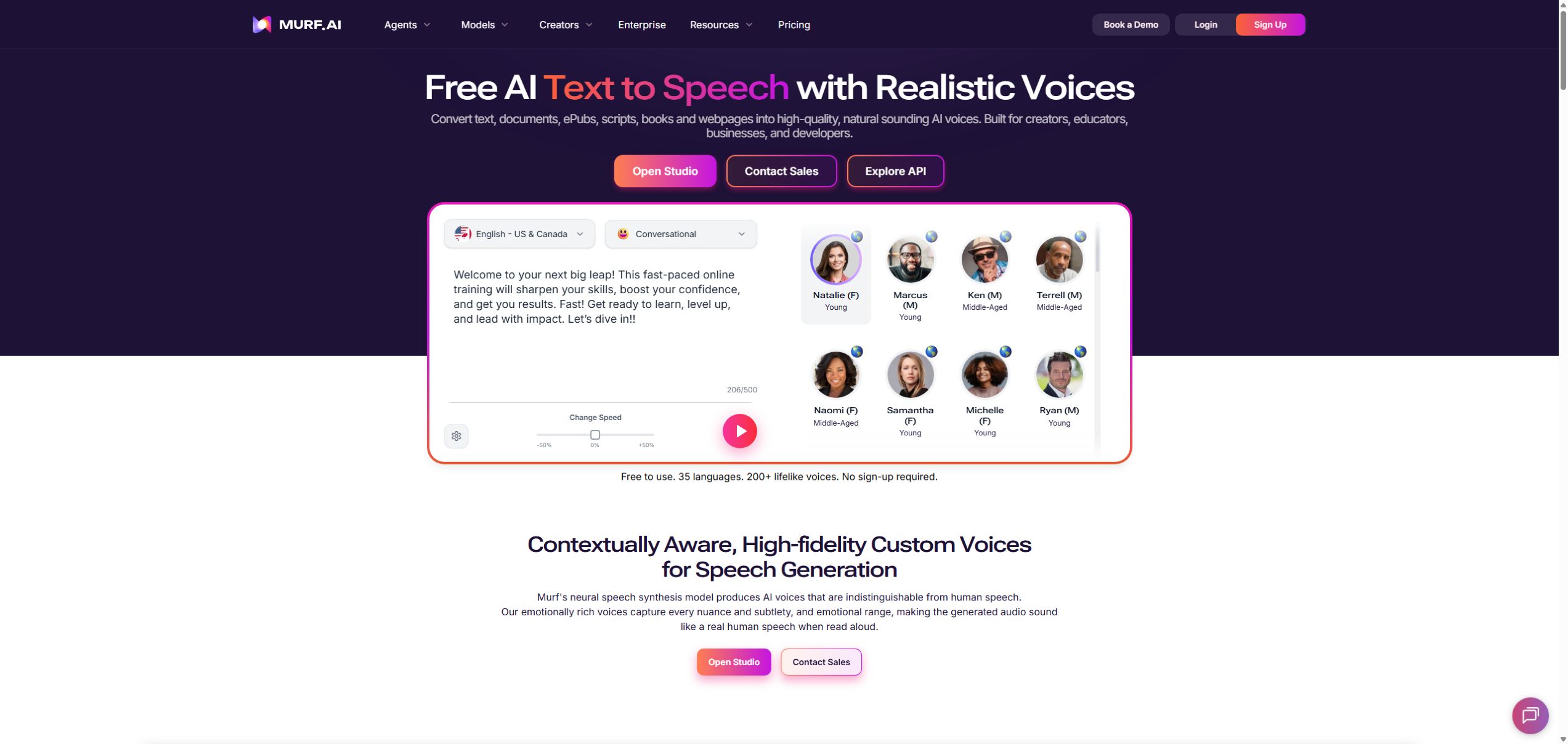
Murf also sells Falcon, a low-latency TTS model for agents and IVR. Its current product page claims sub-55ms model latency, support for 10,000 concurrent calls, and pricing from $0.01 per minute. Those are Murf’s published figures, not my independent benchmark. Test time to first audio, tail latency, interruptions, and code-mixed speech inside your own pipeline before treating any headline number as a promise.
Voice quality depends on how much acting the script needs
For expressive narration, ElevenLabs has the higher ceiling. Its library, voice design, cloning options, and delivery controls make it easier to build a recognizable voice and push a line toward a specific emotion. That is valuable for fiction, documentary work, games, and creator brands.
Murf’s strength is steadier business narration. The public editor includes conversational and use-case filters, while Studio adds pronunciation and delivery controls. For e-learning or a product walkthrough, predictable pacing and a reusable pronunciation library can matter more than dramatic range.
I would test both with the same awkward script: one surname, one acronym, one date, a sentence that changes emotion halfway through, and a paragraph longer than 150 words. Listen for the first bad syllable, then count the steps required to fix it. The best first take often loses to the cheapest correction loop.
ElevenLabs vs Murf AI pricing in 2026
I checked both official pricing pages on July 23, 2026. ElevenLabs was showing monthly billing. Murf was showing yearly billing expressed as a monthly rate, so do not compare the large numbers without reading the billing label.
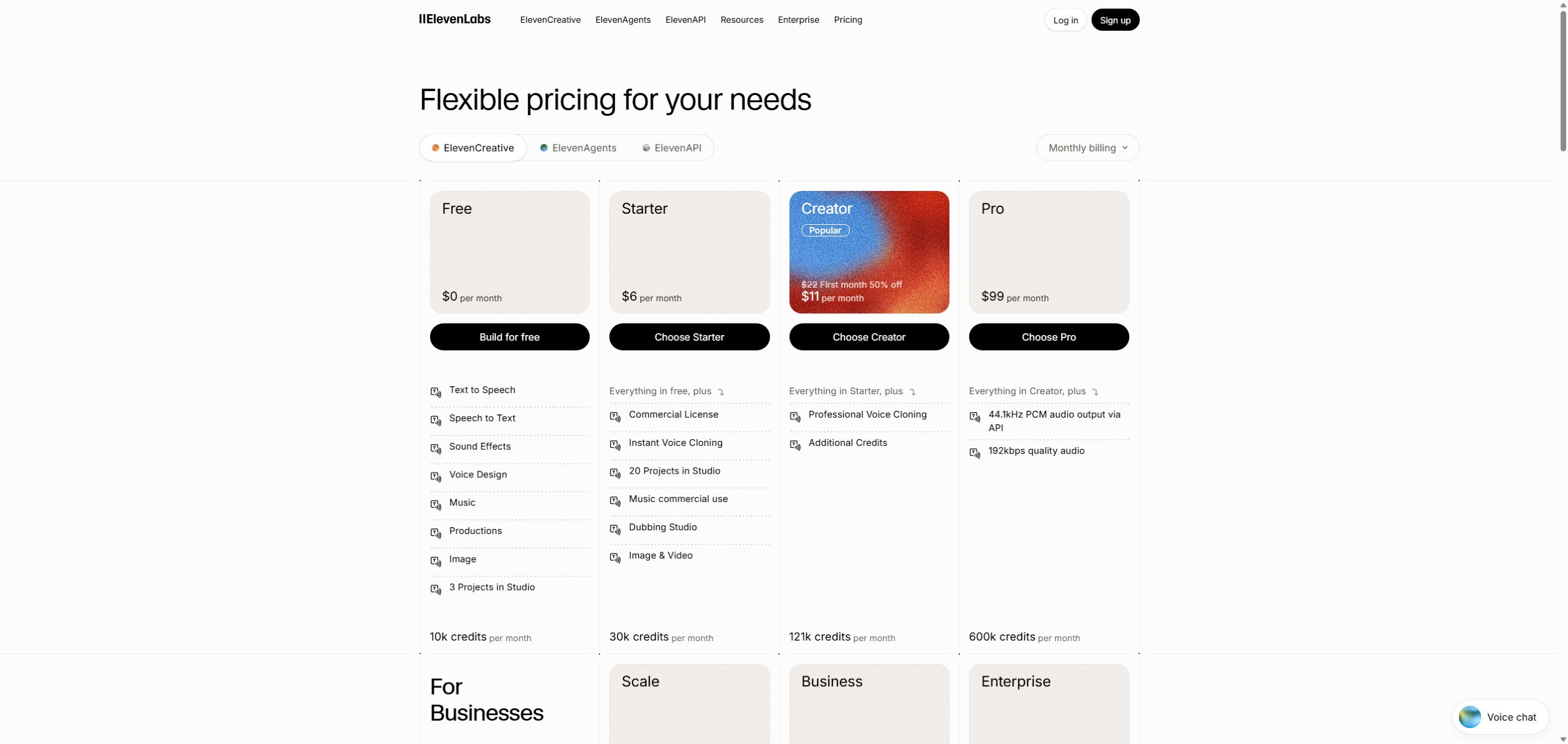
ElevenLabs currently lists:
- Free at $0 with 10,000 credits per month.
- Starter at $6 per month with 30,000 credits, a commercial license, instant voice cloning, and 20 Studio projects.
- Creator at $22 per month with 121,000 credits and professional voice cloning. The page showed a $11 first-month offer when checked.
- Pro at $99 per month with 600,000 credits and higher-quality audio options.
Murf Studio currently lists:
- Free at $0 with 10 projects, 10 minutes of voice generation, one editor, no downloads, and no commercial rights.
- Creator at an effective $19 per month, billed $228 annually, with 24 hours of voice generation per year, 100 projects, one editor, unlimited downloads, and commercial rights.
- Business at an effective $66 per month, billed $792 annually, with 96 hours per year, 500 projects, one editor, advanced voice controls, and business integrations.
- Enterprise with custom pricing, collaboration, custom editors, and unlimited voice generation.
ElevenLabs is much cheaper to enter if you need commercial TTS. Murf Creator asks for a yearly commitment but gives a business producer a large annual pool and a structured project workspace. Murf’s one-editor limit on both Creator and Business deserves attention. A team may need Enterprise for true collaboration even when its generation volume fits a lower plan.
What people complain about on Reddit
Reddit is useful for finding failure modes, not measuring their frequency. The people posting there skew technical, skeptical, and annoyed enough to write a paragraph. I treat the comments as test prompts, not market statistics.
ElevenLabs complaints center on cost and inconsistent retakes
In a recent r/ElevenLabs thread, a creator said a conversational project consumed the basic allowance while they regenerated sections for pacing, laughs, sighs, and accent consistency. Commenters also described phrases changing accent between attempts. The lesson is familiar: expressive control can increase the amount of audio you throw away.
A newer r/TextToSpeech comparison praised ElevenLabs for voice quality but warned that agent pricing became uncomfortable at real call volume. Commenters focused on latency spikes and consistency under load, not the beauty of one isolated clip.
Murf complaints are more about fit than a broken editor
The Reddit sample for Murf Studio is thinner, so I would not pretend there is a universal complaint list. In that same r/TextToSpeech discussion, the author nearly skipped Murf because they thought of it as a voiceover tool. Murf Falcon performed better than expected for their multilingual agent use case, but the author still advised testing every provider in your own stack.
For Studio buyers, the visible concerns come from the plan itself: annual billing for the advertised $19 rate, one editor on Creator and Business, no downloads or commercial rights on Free, and advanced controls reserved for Business. Those are not hidden scandals. They are the boring details that decide whether a team enjoys the product after procurement.
Who should choose ElevenLabs
Choose ElevenLabs if:
- You produce audiobooks, character voices, documentary narration, or creator-led audio.
- You need stronger emotional direction or a distinct cloned voice.
- Speech must run inside an app, game, agent, or automated workflow.
- You already edit audio or video elsewhere.
- A low-cost commercial entry plan matters.
Avoid it if your team wants one controlled workspace for presentations, approvals, reusable pronunciations, and business project organization. A great voice file does not manage its own review meeting.
Who should choose Murf AI
Choose Murf if:
- You make training, presentation, product demo, or internal communication content every month.
- Pronunciation consistency matters across a library of business material.
- Canva, PowerPoint, project folders, and predictable yearly hours fit the job.
- Nontechnical editors need to update narration without rebuilding a voice pipeline.
- Falcon’s agent pricing and latency profile survive a real test in your stack.
Avoid it if you want the deepest character performance controls, many editor seats on a mid-tier plan, or a cheap month-to-month experiment with commercial rights.
Who should skip both
Neither tool is the obvious answer if you need local processing, offline use, open weights, or complete control over hosting. A self-hosted model may fit better, but you inherit setup, pronunciation fixes, deployment, and maintenance.
Both are also excessive for one short voiceover every few months. Use the free editors to validate the script, then pay only when commercial rights, download access, cloning, or production volume justify the subscription.
My verdict
ElevenLabs wins when the voice needs to perform. Murf AI wins when the voice needs to pass through a repeatable business production system. For an audiobook chapter, character scene, branded narrator, or embedded speech product, I would start with ElevenLabs. For a course library, presentation program, product-demo queue, or internal training team, I would start with Murf.
Run one ugly script through both before subscribing. Keep the names, acronyms, emotional turn, and late correction that your real work contains. Then price the second and third take, not the demo you got lucky with.
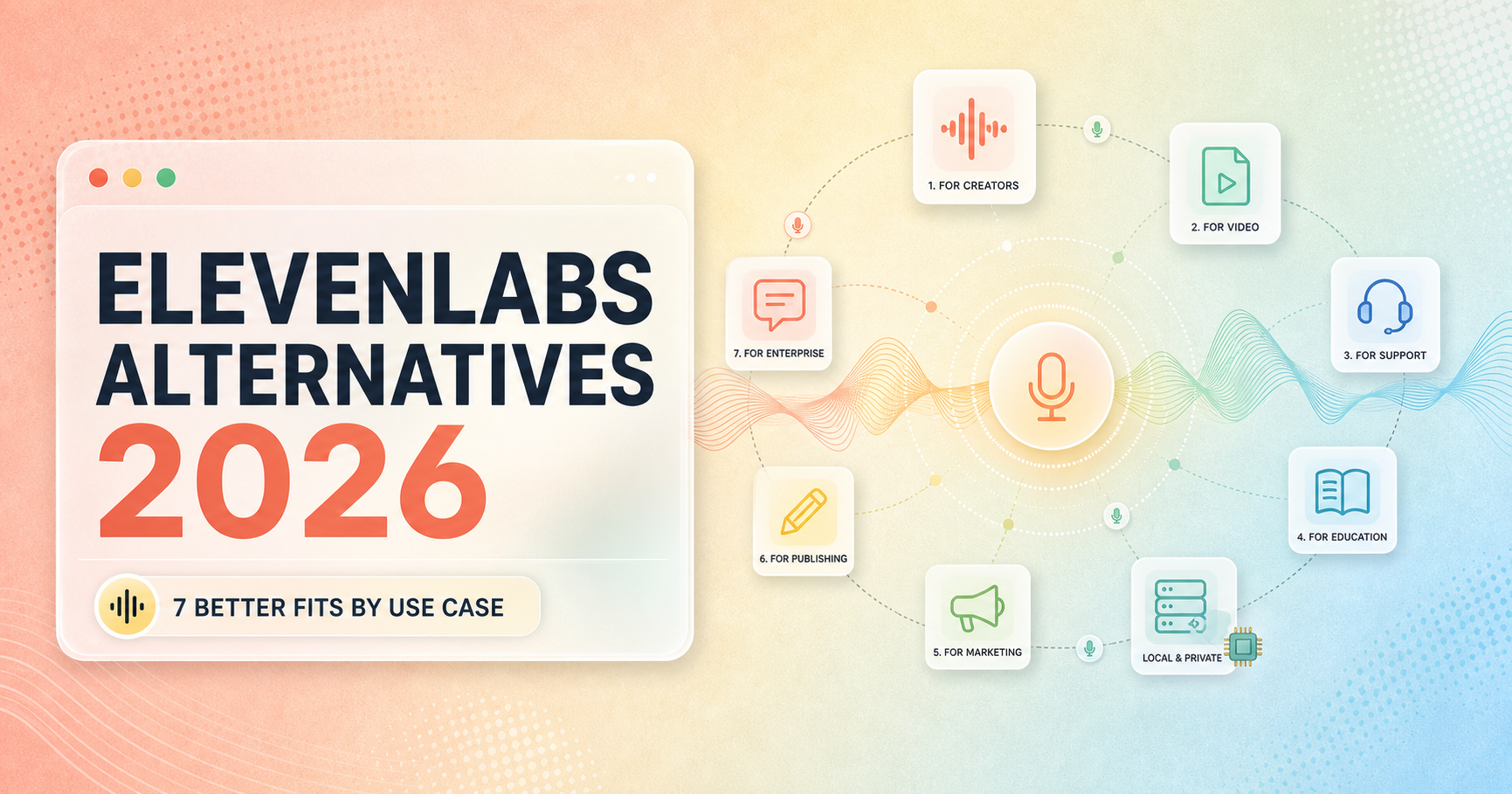
If neither workflow sounds right, use my ElevenLabs alternatives 2026 guide to compare Descript, Speechify Studio, Cartesia, OpenAI TTS, Google Cloud TTS, Kokoro, and Murf by the job each one handles best.