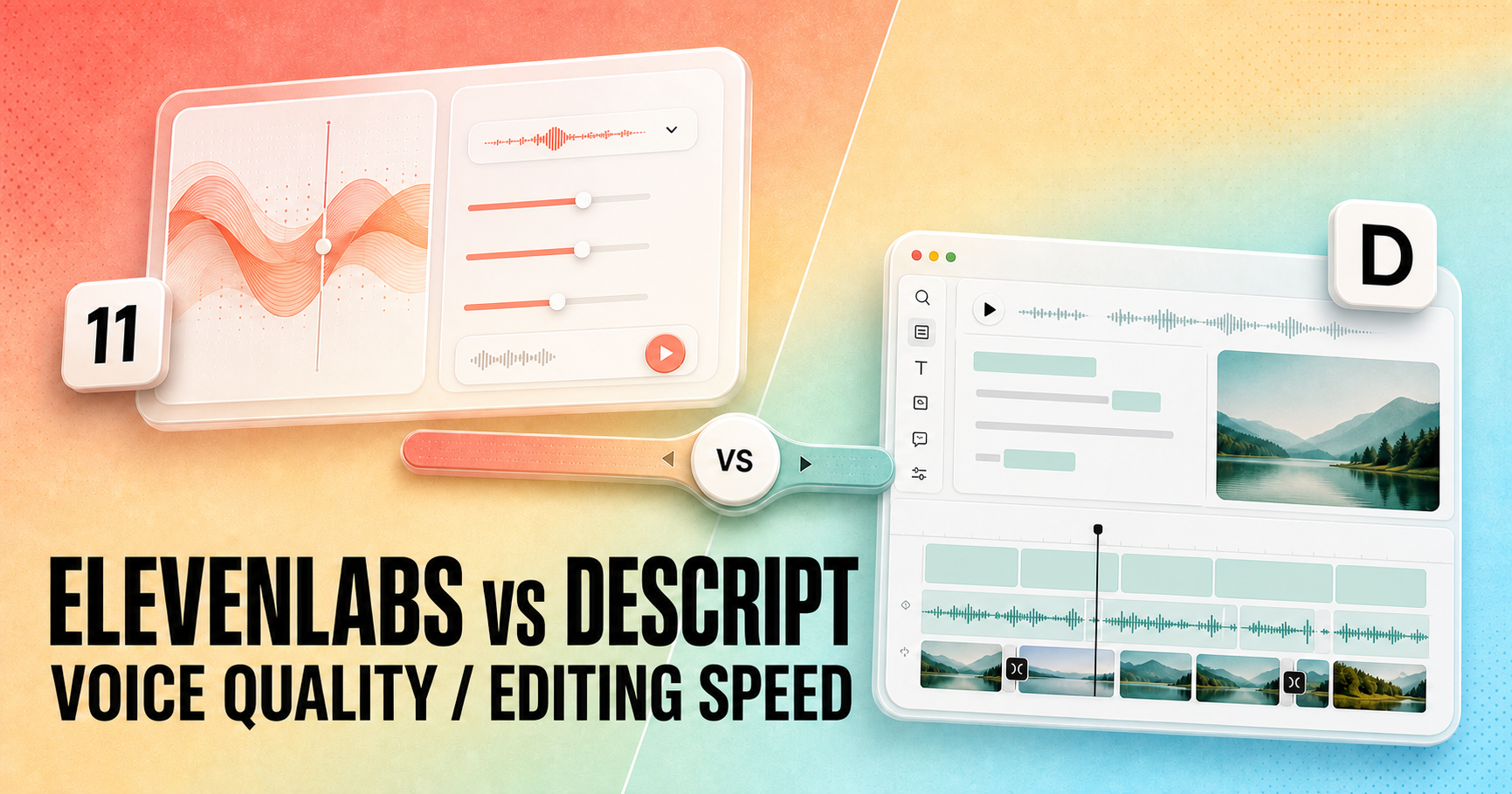
ElevenLabs vs Descript sounds like a straight AI voice comparison. It is not. ElevenLabs is a voice specialist. Descript is an editing room that happens to generate voices inside the project.
That difference decides the winner faster than a blind listening test. For a character voice, a dubbed track, or speech inside an app, ElevenLabs starts ahead. For a podcast or video where the script will change six times before export, Descript usually saves more production time.
There is one wrinkle most comparisons miss: Descript’s current AI Speaker documentation says non-legacy subscribers can use tags and inline prompts with the ElevenLabs v3 model. In other words, Descript can put ElevenLabs voice technology inside a broader editing workflow. The choice is partly about where you want to work, not only which model sounds better.
The production decision that matters
Pick ElevenLabs when the voice is the product. Pick Descript when the finished video or podcast is the product.
ElevenLabs gives you the better voice lab. You can browse and design voices, tune delivery, clone a consenting speaker, build dubbing projects, and send speech through an API. It suits work where a voice must carry ten minutes without sounding like a navigation app having a difficult day.
Descript wins after recording. You edit the transcript to cut the media, remove filler words, repair a phrase with an AI Speaker, add captions, clean the sound, rearrange scenes, and export from the same project. That is a large advantage when the first voice generation is only the start of the job.
Voice quality and control: ElevenLabs wins
ElevenLabs gives voice-first creators more room to steer the result. Its dedicated controls and models make it easier to chase a specific pace, texture, or emotional read. The broad library also helps when a project needs several distinct narrators rather than one cloned host.
That control has a cost. A promising take can miss one name. The next take may fix the name and flatten the sentence around it. Long scripts need chunking, pronunciation notes, and a boring file naming system. For long projects, generate in short approved sections. Rerunning a full scene to repair one phrase is a fine way to turn credits into regret.
Descript’s AI Speakers are useful, especially for replacing a bad word or adding a short line in the speaker’s voice. They are less satisfying when I want to sculpt a performance line by line. Descript’s own troubleshooting guide says the current AI Speaker model is based on US English pronunciation. It also notes that one AI Speaker does not support several style variations. You create separate AI Speakers for different deliveries, and the original training performance shapes the output.
For audiobook chapters, character dialogue, expressive narration, dubbing, or a voice API, ElevenLabs is the safer pick.
Editing speed: Descript wins
Descript treats speech as editable text. Delete a sentence from the transcript and the corresponding media disappears. Replace a phrase and Regenerate can repair it without another recording session. The generated clip still sits beside captions, video, music, and the rest of the timeline.
That sounds like a small convenience until a client changes the opening after captions are finished. With a separate voice generator, the repair usually means a new audio file, another import, a timeline replacement, timing adjustments, and a caption check. In Descript, the fix stays closer to the sentence that caused the trouble.
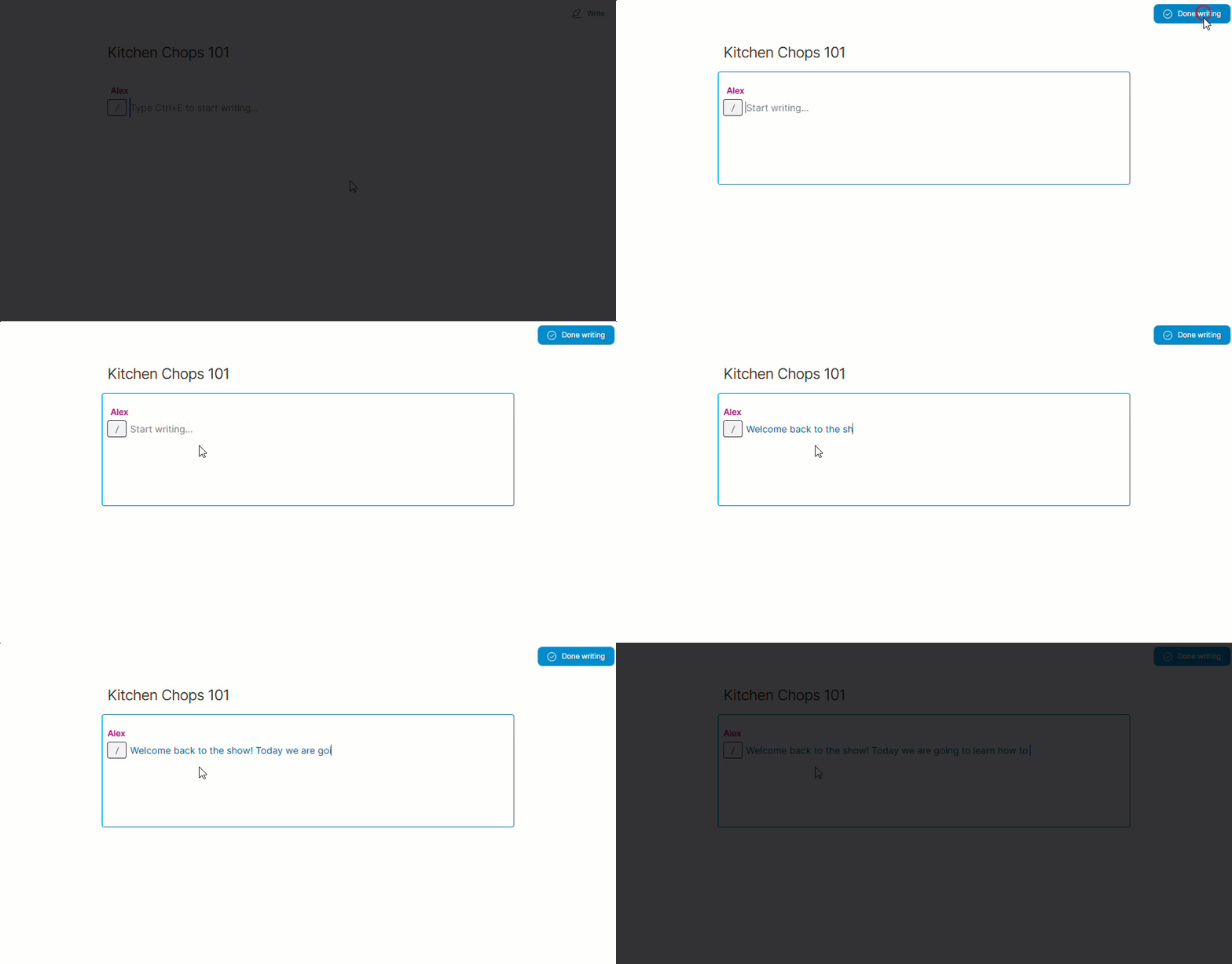
Descript still asks more of your computer and your patience than a simple text box. It is a full editor. When the project gets busy, transcript accuracy, scene structure, media processing, and AI credit usage all matter. If you only need an MP3 from a script, opening the whole editing desk feels like using a moving truck for groceries.
For podcasts, interviews, talking-head videos, tutorials, social clips, and anything with frequent revisions, Descript saves the more expensive resource: human editing time.
2026 pricing is not a clean monthly comparison
I checked both pricing pages on July 23, 2026. The numbers look simple until you compare what each meter measures.
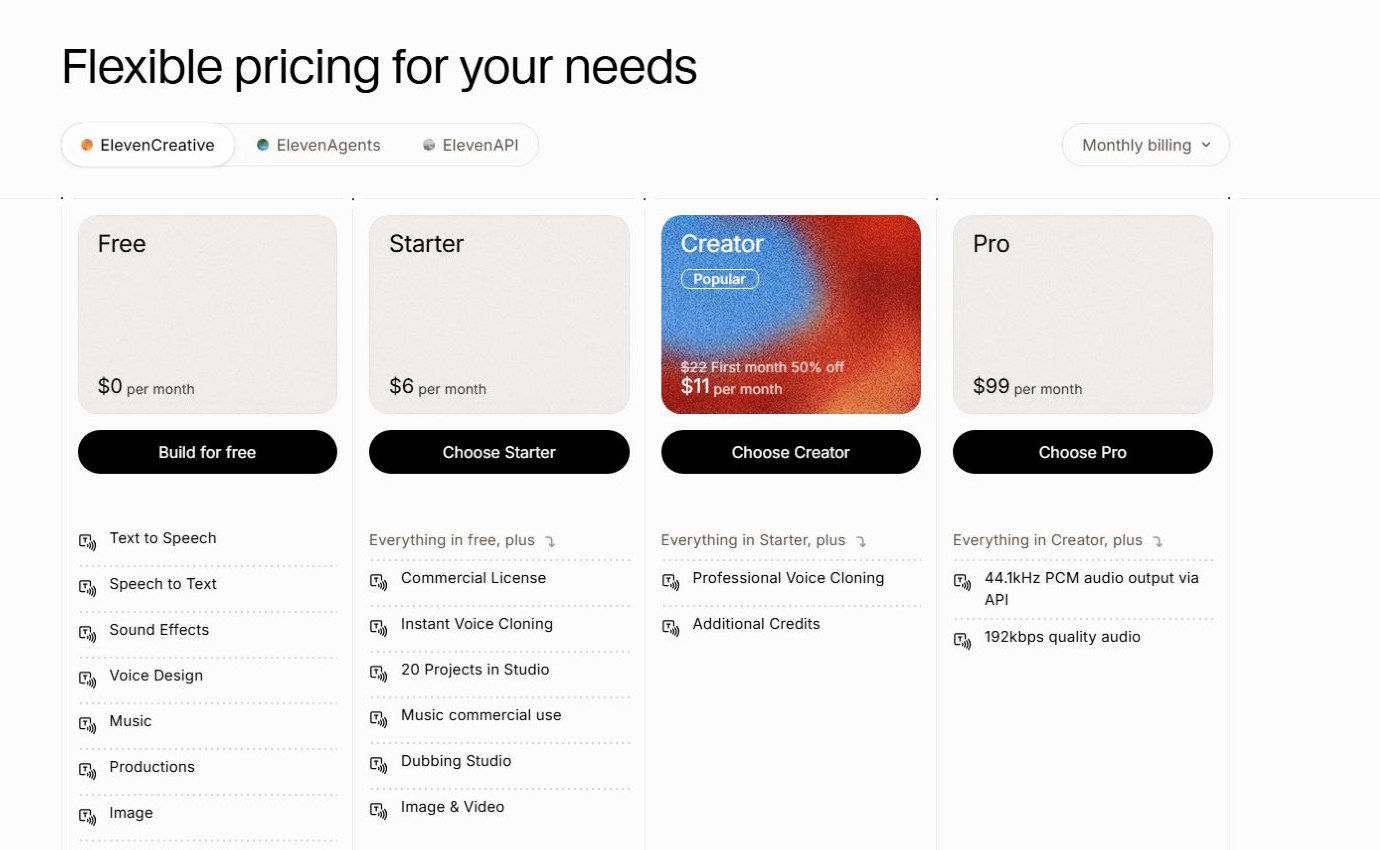
ElevenLabs currently lists:
- Free at $0 with 10k credits each month.
- Starter at $6 per month with 30k credits and a commercial license.
- Creator at $22 per month, with a first-month promotion shown at $11, and 121k credits.
- Pro at $99 per month with 600k credits and higher-quality output options.
Descript’s current pricing separates media hours from AI credits:
- Free includes 60 media minutes each month and 100 one-time AI credits.
- Hobbyist costs $16 per person each month with annual billing, or $24 month to month. It includes 10 media hours and 400 AI credits per month.
- Creator costs $24 per person each month with annual billing, or $35 month to month. It includes 30 media hours and 800 AI credits per month.
- Business starts at $50 per person each month annually, or $65 month to month, with 40 media hours and 1,500 AI credits.
The cheapest plan depends on the workflow. ElevenLabs Starter costs less if you only generate occasional speech. Descript can be better value when one subscription replaces a transcript editor, audio cleanup tool, caption workflow, and voice repair service.
Do not compare the first successful minute. Compare one finished project with retakes. Voice generation is cheap when every sentence behaves. Sentences have not signed that agreement.
What I found people complaining about on Reddit
Reddit is useful for finding friction that product pages do not volunteer. It is not a controlled test, and product subreddits overrepresent power users and people having a bad afternoon. The repeated themes are still worth checking before you pay.
Common ElevenLabs complaints
The loudest theme is credit anxiety during long-form work. One creator in r/ElevenLabs described burning through a monthly allowance while regenerating a 30-minute conversation to get laughs, pauses, and pacing right. Other recent users complained about unused credits disappearing or repeatedly paying for new takes when a voice changed between generations.
The practical complaints are:
- Long narration costs more than the final duration because retakes consume the allowance.
- A voice or model update can make an old project harder to continue consistently.
- Subscription credits, API billing, rollover, and plan upgrades are easy to misunderstand.
- A failed or weak generation still costs time, even when a credit is returned.
None of that makes ElevenLabs bad. It means you need a revision budget and approved samples before generating a 40-minute chapter.
Common Descript complaints
Descript users complain less about raw voice realism and more about the workspace. A long-time editor in r/Descript said reliability and the new credit system had them watching the balance instead of the timeline. Another user described assigning voices in a two-character script and using credits while correcting the setup.
The recurring complaints are:
- App or network errors interrupt an otherwise fast editing workflow.
- AI credits can feel unpredictable when several tools share the same pool.
- Stock voice and accent choices may not fit a recurring show.
- Users coming from ElevenLabs want finer control over expression and delivery.
- Multi-speaker transcription and speaker labels can need manual repair.
That last point matters for podcasts. Descript saves time when the transcript is right. If five similar voices are mislabeled, the clever text editor becomes a labeling job wearing a nicer shirt.
Who should choose ElevenLabs
ElevenLabs is the better fit if:
- You publish audiobooks, documentaries, character dialogue, or narration where voice quality carries the piece.
- You need dubbing, voice design, a large voice library, or an API.
- Your editor already works in Premiere Pro, Resolve, Final Cut, or another established timeline.
- You can approve short sections and manage pronunciation before generating the final audio.
- You need several voices with distinct styles more than you need one integrated editing workspace.
It is a poor fit if your biggest time sink is moving files between tools or repairing a constantly changing script.
Who should choose Descript
Descript is the better fit if:
- You make podcasts, talking-head videos, interviews, tutorials, or social clips.
- The script changes after recording and you often repair short phrases.
- One person handles transcript cleanup, audio repair, captions, video cuts, and export.
- A shared project matters more than access to a huge voice marketplace.
- You want AI speech as one tool inside production, not a separate production stage.
It is a poor fit if you only need a speech API, demand very fine voice direction, or already have an editing stack your team can operate in its sleep.
My one-script decision method
Use the same 90-second script in both products. Include a name, an acronym, a price, a parenthetical aside, and one sentence that changes emotion halfway through. Generate it once, then make these edits:
- Replace one sentence after the first export.
- Fix a mispronounced product name.
- Make one line sound less excited.
- Cut eight seconds without breaking the rhythm.
- Export the finished audio and, if relevant, captions or video.
Track the time and the credits used for the entire exercise. The first take tests the model. The revision round tests the product.
Also listen without watching the brand name. Use headphones for the final pass. Laptop speakers hide breaths, clipped endings, and sharp sibilance with the loyalty of a bad friend.
Which one should you buy?
For voice-first work, ElevenLabs wins. It offers the deeper voice toolkit, better specialist controls, and the clearer path to APIs, dubbing, and multi-voice production.
For edited media, Descript wins. A slightly less controllable voice can still be the better production choice when every correction stays beside the transcript, captions, and timeline.
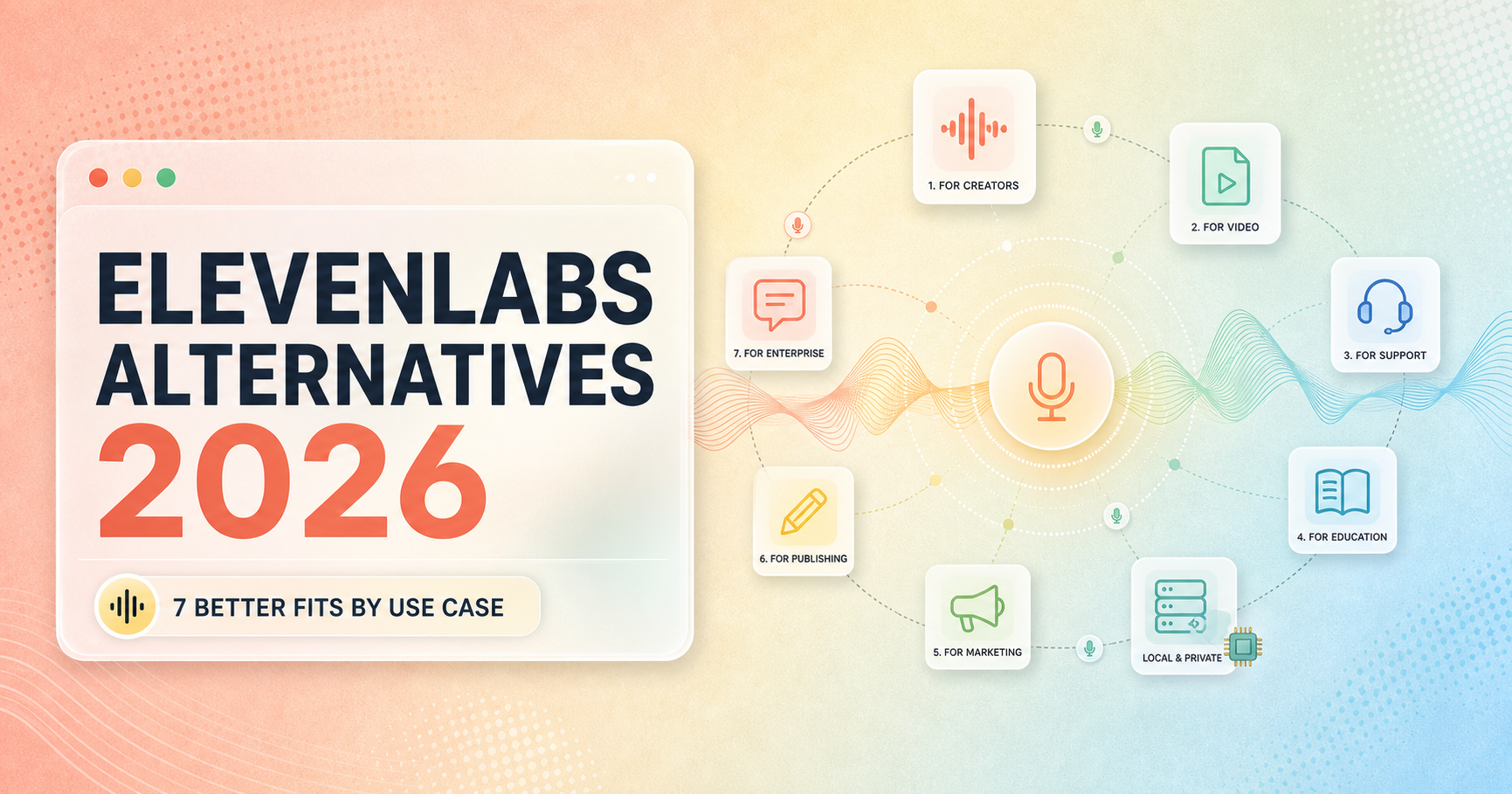
If neither workflow sounds right, continue with my guide to the ElevenLabs alternatives 2026. It compares creator studios, real-time APIs, cloud TTS, and a local option so you can move beyond this two-product decision.
My buying rule is simple: pay ElevenLabs for the voice. Pay Descript for everything that happens after the voice exists.