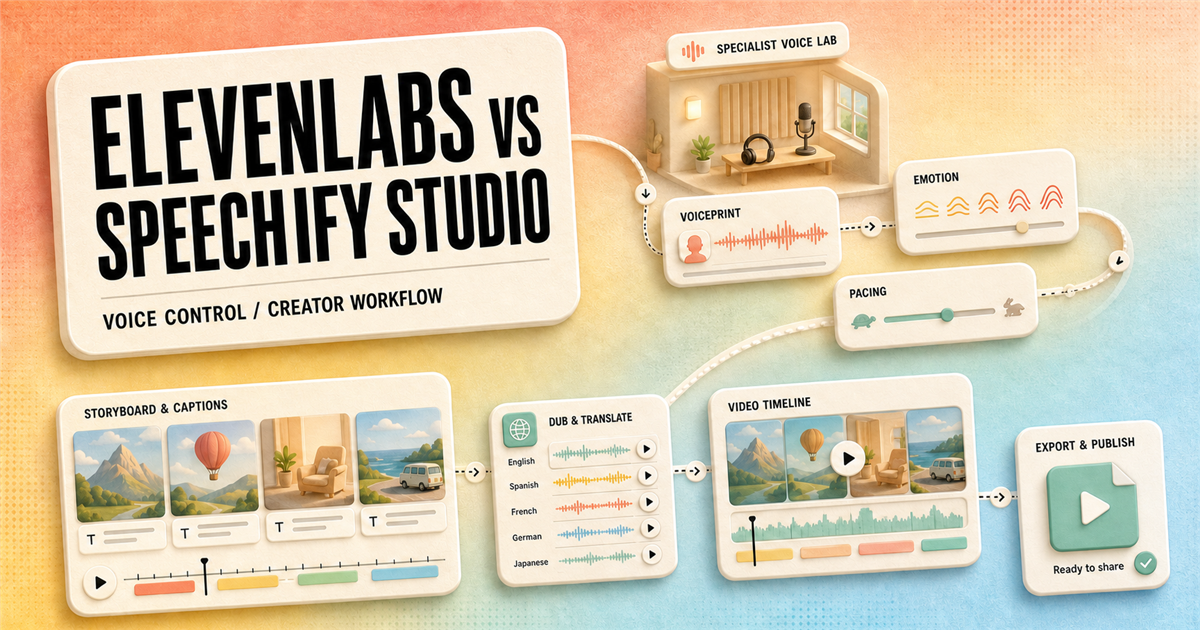
ElevenLabs vs Speechify Studio looks like a contest between two AI voice generators. That framing misses the useful difference. ElevenLabs is a specialist voice lab with deeper delivery control and a mature API. Speechify Studio is a browser production suite that puts voiceover beside dubbing, avatars, captions, stock media, and video.
The better choice depends on what you hand to a client. If the voice file is the product, ElevenLabs usually earns the subscription. If the client expects a finished multilingual video, Speechify Studio can remove more steps from the week.
I would not choose either from a polished ten-second demo. The expensive part arrives after the first take, when a name sounds wrong, the pacing drifts, or the client changes two sentences after export. That is where the products stop looking interchangeable.
The choice is voice control versus production range
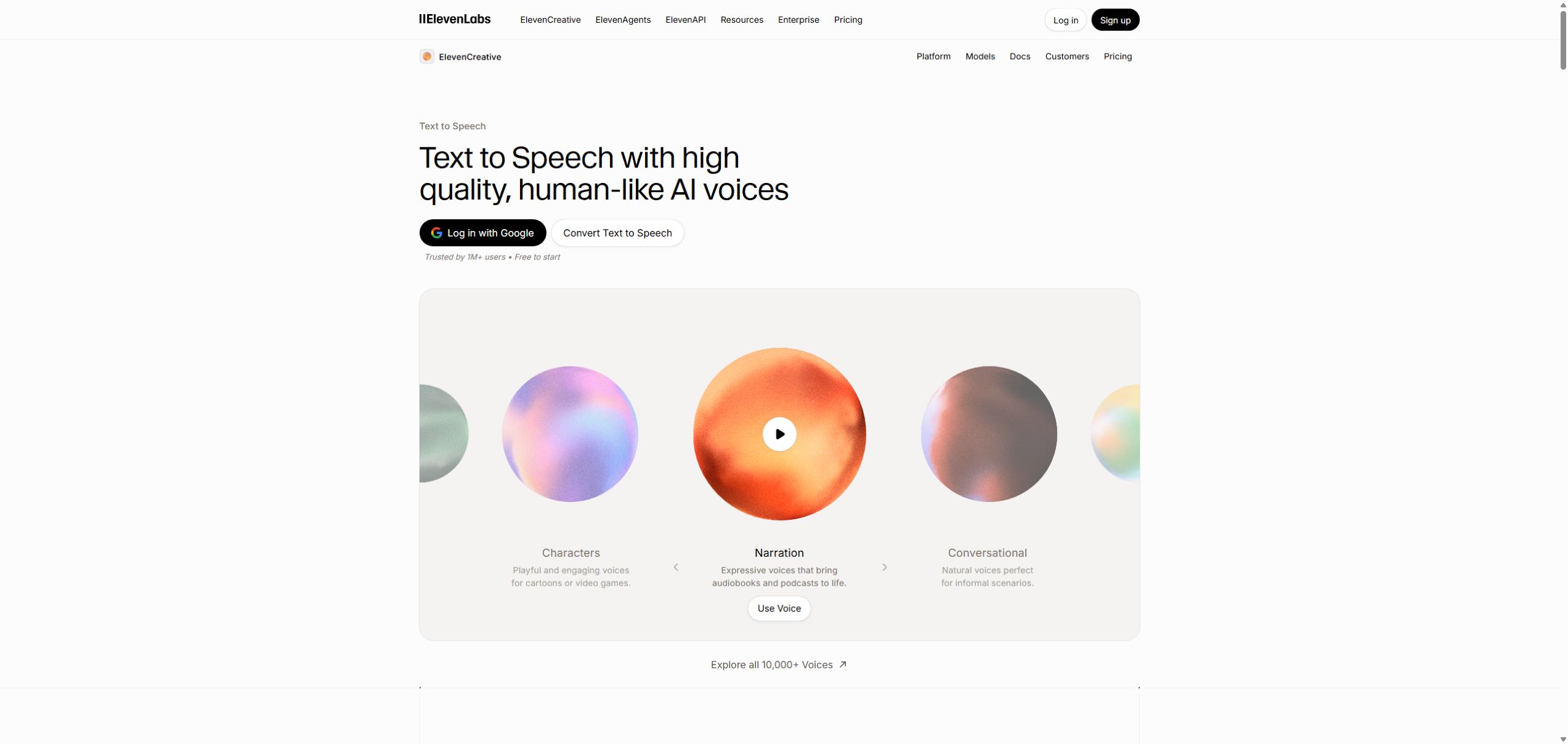
ElevenLabs concentrates its best tools around speech. Its public text-to-speech product includes emotion and delivery controls, voice design and cloning, dialogue support, more than 10,000 voices, and speech in over 70 languages. It also connects cleanly to applications through the ElevenLabs API.
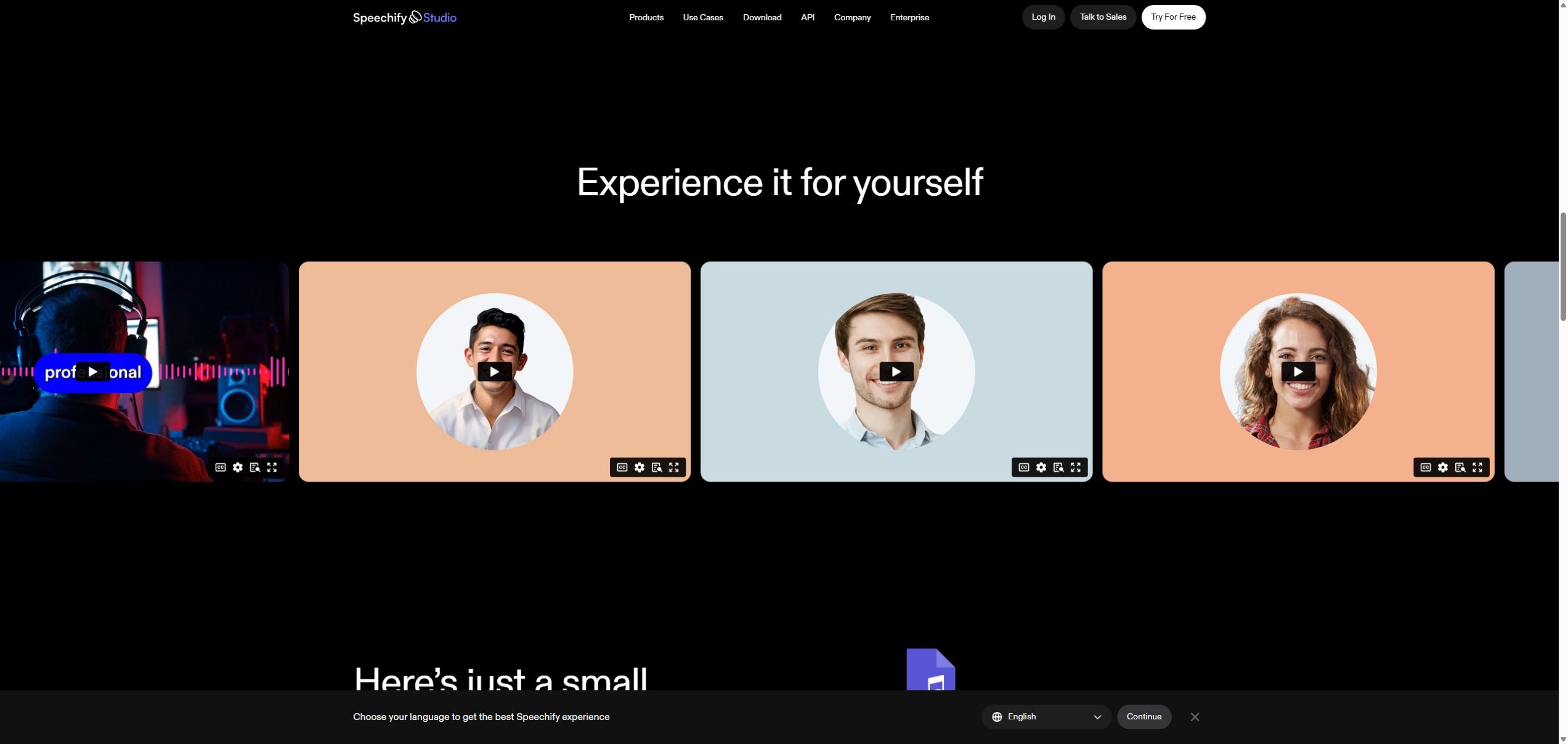
Speechify Studio spreads its value across a longer production chain. Its official Studio page groups voiceover, voice cloning, video creation, dubbing, and captions in one browser workspace. The platform also supplies stock images, audio, and video, which matters when the job starts as a script and ends as a publishable asset.
My buying rule starts here: ElevenLabs gives you more reason to care about the voice. Speechify Studio gives you fewer reasons to leave the project.
ElevenLabs wins on voice direction
ElevenLabs is the stronger pick when one voice must carry an audiobook chapter, documentary, character scene, or branded narration. The product gives you a large voice library, dedicated models, cloning, and controls for pace, tone, and expression. Eleven v3 also accepts audio tags for moments such as laughter or a softer delivery.
Those controls are useful, but they are not a vending machine. One generation may nail the emotional turn and mispronounce the product name. The next may fix the name and flatten the sentence. For long work, split scripts into approved chunks, lock pronunciation early, and keep a small retake allowance. Generating a 30-minute scene in one heroic click is exciting right up to the first bad acronym.
The API also changes the comparison. A developer can call ElevenLabs from a support agent, game, reading app, or internal workflow. Speechify has a separate developer platform, but Speechify Studio itself is aimed at creators working in a visual project. Do not buy a browser editing suite when your actual requirement is a speech endpoint.
Pick ElevenLabs for voiceovers where vocal identity and delivery matter more than the surrounding video workflow. It is also the cleaner choice when your team already edits in Premiere Pro, Resolve, Final Cut, or another timeline it knows well.
Speechify Studio wins on the finished asset
Speechify Studio becomes more attractive when narration is one stage in a larger job. The same workspace can handle voiceover, dubbing, captions, stock media, avatars, and video assembly. That range is handy for a solo creator who would otherwise move a script through four tabs and name the exports final-final-actually-final.mp4.
Its dubbing workflow is the clearest reason to choose it. Speechify says Studio can change a video’s language while matching the speaker’s voice, intonation, and speed. For a course, product demo, or social campaign that needs several markets, keeping translated audio and video inside one project can save more time than squeezing extra nuance from a single English voice.
The tradeoff is focus. A wide suite gives you more ways to finish a project, but it does not automatically give you finer performance control. If you spend an hour nudging one character’s sarcasm, ElevenLabs is closer to the job. If you spend that hour matching captions, translations, scenes, and exports, Speechify Studio is closer.
ElevenLabs vs Speechify Studio pricing in 2026
I checked both official pricing pages on July 23, 2026. These are monthly prices shown on the public pages, not affiliate estimates.
ElevenLabs currently lists a Free plan with 10,000 monthly credits. Starter costs $6 per month with 30,000 credits and a commercial license. Creator normally costs $22 per month, with a first-month price of $11 shown at the time of checking, and includes 121,000 credits. Pro costs $99 per month with 600,000 credits.
Speechify Studio lists a Free plan with 600 Studio credits. It has no voice cloning or commercial usage rights. Studio Starter costs $19 per month with 7,200 credits, voice cloning, and commercial usage rights. Studio Creator costs $49 per month with 28,800 credits.
The numbers are not directly comparable because the products charge for different units. Speechify calls Studio credits a universal currency across voiceovers, dubbing, avatars, cloning, and other tools. Its public FAQ currently says:
- Voiceover uses 1 credit per second.
- Dubbing uses 3 credits per second.
- Avatars use 30 credits per second.
- A new generation costs credits, including changes to pitch, speed, or emotional prosody.
- Re-exporting unchanged speech does not consume more credits.
That means the $19 Starter allowance represents about 120 minutes of plain voiceover, about 40 minutes of dubbing, or only four minutes of avatar output if one job consumed the entire pool. Real projects mix tools, so the remaining balance will not be that tidy.
ElevenLabs costs less to enter and offers a commercial license on Starter. Speechify Studio charges more, but the bill may replace separate voice, dubbing, caption, media, and video tools. Price one finished project with corrections. Comparing the first clean minute is how credit systems win arguments they should not.
What I saw people complain about on Reddit
Reddit gives you failure modes that pricing pages politely leave off the menu. It also overrepresents power users, frustrated customers, and people who opened the site during a billing dispute. Treat these posts as warning lights, not survey results.
ElevenLabs complaints: retakes eat the allowance
The most useful ElevenLabs complaint is credit burn during long-form work. In a recent r/ElevenLabs discussion, a creator said a 30-minute conversational project consumed the basic plan while they regenerated blocks for pacing, laughs, sighs, and a specific accent. A commenter described individual phrases unexpectedly switching accents, which forced more generations. A moderator also acknowledged reports of unusual v3 generations.
A separate r/tts comparison rated ElevenLabs highly for realism and emotion control, while putting it near the expensive end of the starting plans by audio minutes per dollar. The author disclosed that they co-founded another voice product, so I treat the ranking as one practitioner’s test, not neutral lab data.
The pattern is credible even without turning anecdotes into statistics: fine control invites more attempts. Budget for the audio you reject, not only the audio you publish.
Speechify complaints: check which Speechify product people mean
This is where sloppy comparisons cause trouble. Reddit complaints about “Speechify” often concern the Reader subscription or audiobook service, not Speechify Studio. One recent r/audiobooks thread describes trouble canceling a trial and contacting support. That is a serious customer experience warning, but it does not prove that Studio’s dubbing or voice editor fails.
The relevant Studio concern comes from its own pricing model: one credit pool funds tools with very different burn rates. A minute of avatar output costs thirty times the credits of a minute of voiceover. A pitch, speed, or emotional change also triggers a new paid generation. Creators who jump between voiceover, dubbing, and avatars need to watch the meter at the project level.
Before paying, confirm that the checkout says Speechify Studio, review the commercial rights for that plan, and test the support path. Speechify Reader, Speechify Studio, and Speechify’s developer API are related brands, not interchangeable subscriptions.
Who should choose ElevenLabs
ElevenLabs fits you if:
- The voice is the part your audience notices first.
- You produce audiobooks, documentary narration, game dialogue, or character-led audio.
- You need a voice API inside an app or automated workflow.
- Your team already has a capable video or audio editor.
- You can approve short script sections and manage retakes deliberately.
Skip it if your bottleneck is assembling captions, translated video, stock media, and final exports. A beautiful WAV file is still a loose file.
Who should choose Speechify Studio
Speechify Studio fits you if:
- You are a solo creator making complete videos from scripts.
- Dubbing and multilingual versions appear in the same weekly workflow.
- You want voiceover, captions, media, avatars, and video in one browser project.
- You prefer a visual production suite to an API-first tool.
- Fewer handoffs matter more than the deepest voice controls.
Look elsewhere if you only need English speech, require a lean API, or dislike a shared credit pool. Run a careful trial if avatar output will be a large part of the job, because that feature burns credits much faster than voiceover.
Who should avoid both
Neither product is the obvious choice for a team that needs local processing, offline operation, or a fixed compute bill. They also make little sense if a human narrator is central to the brand and every line needs performance direction. AI speech can save pickup sessions. It does not turn a weak script into a good performance.
Developers who only need cheap, high-volume TTS should compare usage-priced APIs before buying a creator subscription. Privacy-sensitive teams should review data handling and consent requirements before uploading client scripts or cloning a voice.
My 90-second test before paying
Use one script in both tools. Keep it short enough to repeat and awkward enough to expose problems. Include a person’s name, an acronym, a price, a sentence that changes mood halfway through, and one line in a second language.
Then run this sequence:
- Generate the full script once.
- Fix one mispronunciation without changing the other lines.
- Make one sentence calmer and another faster.
- Replace a sentence after the first export.
- Produce a dubbed version and check timing against the original.
- Export the final asset, then note every credit spent and every manual step.
Listen without looking at the product name. Use headphones for the last pass because laptop speakers hide clipped endings, harsh sibilance, and odd breaths with impressive loyalty.
The first generation tests the model. The correction round tests the product you will live with.
Which one is worth paying for?
Choose ElevenLabs when vocal performance, cloning, voice variety, or API access is central to the job. It costs less to enter, and its specialist controls give you more room to shape a voice.
Choose Speechify Studio when the finished deliverable includes dubbing, captions, media, avatars, or video. Its shared credit pool needs attention, but one workspace can beat a better standalone voice if the alternative creates hours of file handling.
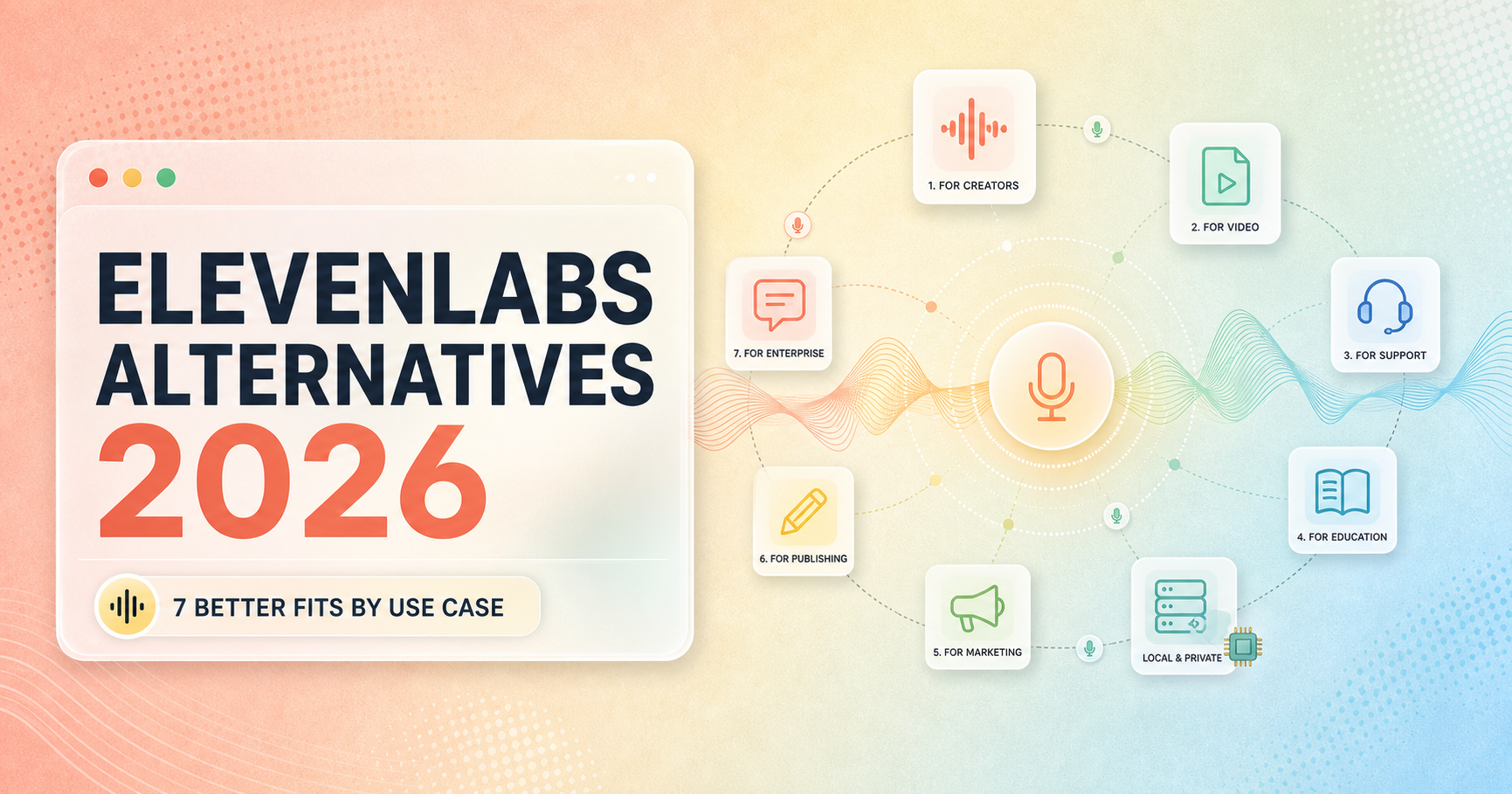
If neither winner feels comfortable, use my guide to the ElevenLabs alternatives 2026 to compare Descript, Murf, Cartesia, cloud APIs, and a local option by use case.
My buying rule: pay ElevenLabs to direct the voice. Pay Speechify Studio to finish the production around it.